Reef
The reef boat
Palancar, Columbia, El Cielo
- Length4 hours
- Reviews1,369 at 4.38
- From$55
Choice helper
Palancar and El Cielo snorkel boat from Cozumel
★ 4.0 · 324 opinions
Summary
Palancar reef Cozumel snorkeling means floating over a deep reef from a boat, with a shallow sandbar stop for easy swimming.
Reef essentials
Two questions, one boat
Say how you swim and what you want from the day, and the boat that fits appears with its starting price.
Best match for you
from $72
A boat day of 4 to 4.5 hours with Palancar reef, El Cielo and a drink, ceviche and fruit on the beach, in a group of up to 14.
Best match for you
from $55
A 4-hour boat tour with drinks that visits the Palancar, Columbia and El Cielo reefs.
Best match for you
from $55
A 4-hour trip to El Cielo, El Cielito beach and Turtle Bay, mostly in shallow water.
Best match for you
from $35
A 2-hour trip over 3 reefs where non-swimmers can stay dry.
Palancar is famous as a reef for divers, so this page says plainly what a snorkeler gets at the surface, how the day is built and where the shallow water is.
Editorial team, palancarsnorkel.quest · Updated November 24, 2026 · Quick read: 7 min
Facts at a glance
Palancar is a name divers know before snorkelers do, and that shapes what you should expect. The Mexican Caribbean tourism board names Palancar, Colombia and Santa Rosa as west-coast stand-outs, praised for coral shapes, underwater walls and very clear water.5 Those are dive-site virtues, so snorkeling at Palancar reef is mostly a matter of floating over a deep coral structure and looking down through water clear enough to see far.
The park's management programme calls Colombia and Palancar the most important reefs of Cozumel and treats the names as one reef structure, running without a real break for some 6 or 7 km along the slope edge.1 You are not visiting a single coral patch but a long wall of reef, and the boat stops at a stretch of it picked on the day.
The practical consequence is that your Palancar day is as much about the water as the coral. You will not stand on this reef and you cannot touch it, since the park's rules forbid touching the reefs and ask visitors to keep 1.5 meters away from them.6,7 If you picture a shallow garden you can swim over at arm's length, the El Cielo stop is closer to that picture than Palancar is.
Reef facts
| Feature | What the park says | Source |
|---|---|---|
| Reef length | About 6 to 7 km as one structure1 | Management programme |
| Crest near Punta Sur | Between 16 and 21 m deep2 | Management programme |
| Shallow formation | About 2 km long, 100 m wide3 | Management programme |
| First terrace | From 0.5 m to 4 m deep10 | Management programme |
| Park area | 11,987.88 ha in total11 | CONANP fact sheet |
| Distance to keep | 1.5 meters from the reefs7 | CONANP rules |
Figures as the park authority states them; they describe the park and not a promise about any one boat stop.1
Depth is the honest answer to whether Palancar is a snorkeling reef. Near Punta Sur the programme describes a single crest of separate blocks whose tops sit deep, in the 16 to 21 m band.2 A snorkeler on the surface looks down on a reef that far below, which is why the coral shows as dark shapes in blue water and not as a colorful bank under your chest.
The same document describes a shallow formation at Palancar that reaches 2 km in length and averages about 100 m in width, and it notes that the shelf around Palancar ends at an edge where huge reefs grow.3,9 It does not give the depth of that shallow formation, so this page does not either. What it does show is that the reef is not uniformly deep, and a boat captain who knows the water will pick the stretch that suits swimmers on the day.
For orientation, the programme describes the first terrace of the shelf as a gentle slope from about 0.5 m to 4 m.10 That terrace is the shallow water along the shore and not the reef, but it explains why a trip often adds a sandy shallow stop after the reef. A day that mixes deep reef and shallow sand gives a first-time snorkeler a view of coral and a place to relax.
Review breakdown
The breakdown the listing shows for its 324 reviews averaging 4.0, a sample of travelers and not a survey of the whole reef.
Several Cozumel listings fold a Palancar and Columbia reef snorkel into a longer boat trip. One 4-hour trip typically makes 3 reef stops along the coast, adds a sandy beach, and supplies equipment and safety gear. The 3 reefs boat tour names the Palancar, Columbia and Playa el Cielo reefs and holds 1,369 reviews with a mean of 4.3.
The day this site sells takes in Palancar reef and El Cielo and then rests on a beach with refreshments, over 4 to 4.5 hours with a group capped at 14. Its reviews average 4.0, and the breakdown rates value for money 4.0, transportation 4.2 and the guide 4.4, a fair sample of a boat day that is friendly but not flawless.
A catamaran variant exists too. A 6-hour catamaran trip lists Palancar reef, El Cielo bay and lunch at a beach park, and sets 8 years as the minimum age for the snorkeling. The listing's stop list names the reef in Spanish as Arrecife Palancar. Compare the stops before you choose a boat, because the same name hides different plans.
Three kinds of snorkel
Reef
Palancar, Columbia, El Cielo
Sandbar
El Cielo, El Cielito, Turtle Bay
Dry
Stay dry over 3 reefs
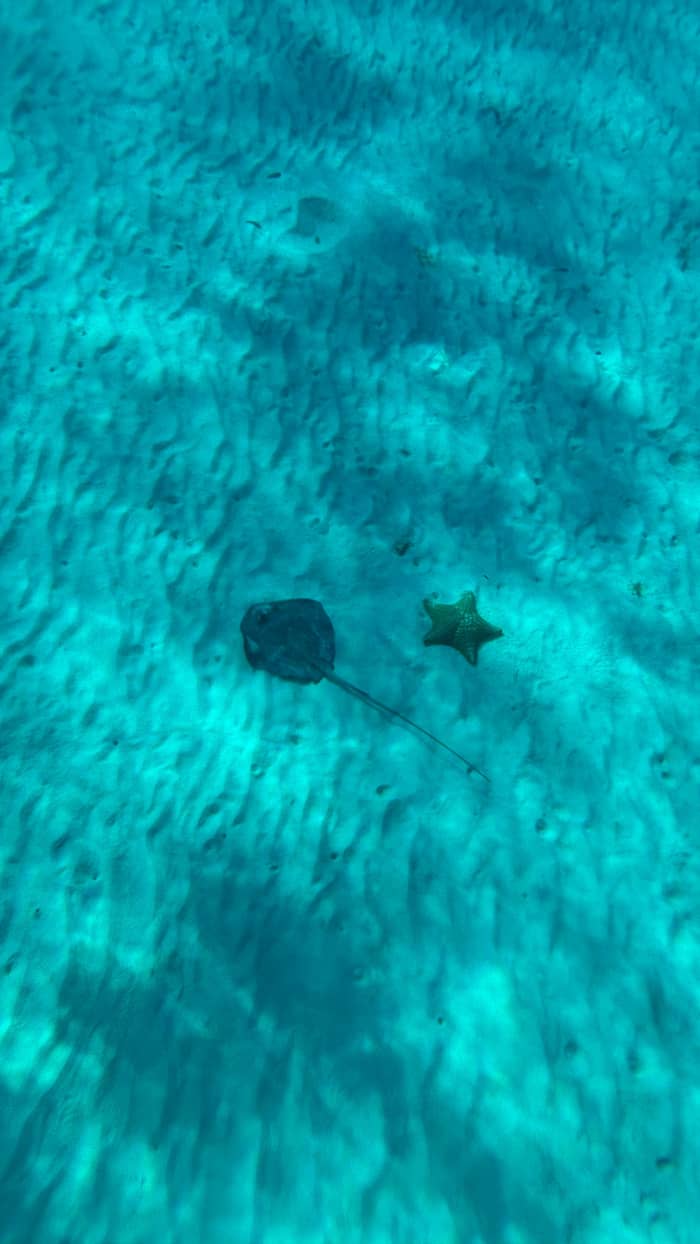
The official picture of the park is rich. CONANP lists the splendid toadfish, the spotted eagle ray, the hawksbill turtle and the dark green parrotfish among the representative species of the park.13 On a boat day you are most likely to meet fish and the occasional turtle or ray, and the listing of the site tour names turtles, rays and corals as what you come to see.
The tourism board says eagle rays are seen from December to March.14 That is a seasonal bonus and not a promise, and no source here says how often a snorkeler meets one. Monitoring in the rested zones recorded blacktip sharks, schools of fish and bottlenose dolphins, which tells you what the wider park holds more than what a short snorkel will show.15
The coral itself is dominated, according to the programme, by very numerous colonies of one species, Montastrea annularis, which are generally under 1 m in circumference and 2 m in height.16 From the surface these read as mounded brown and green heads. The reef is a place to look at and not to touch, and the guide will tell you where to float.
Inside the day
At the pier
The group assembles at the sales desk on the pier before the late-morning sailing.
Boarding
Boarding is at 12 pm and the boat sails the coast to Palancar reef.
Reef stop
The crew hands out masks, snorkels and lifejackets on the site tour.
Sandbar stop
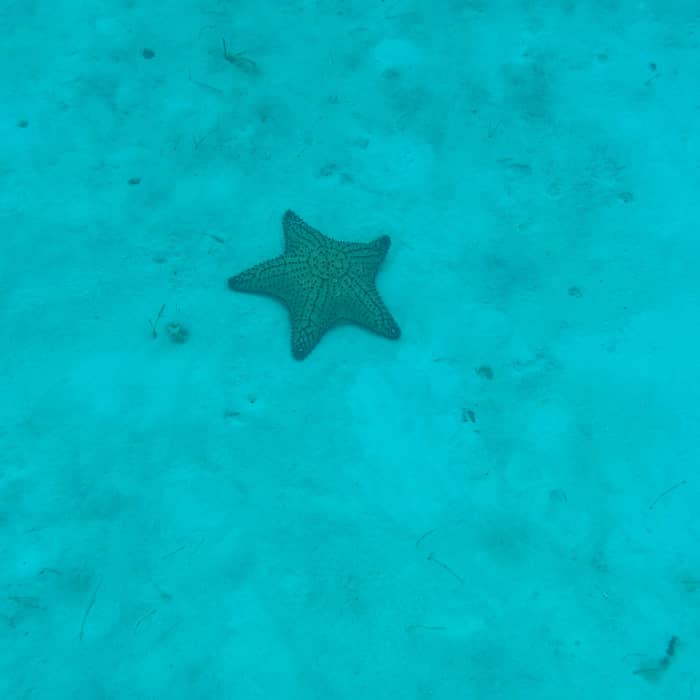
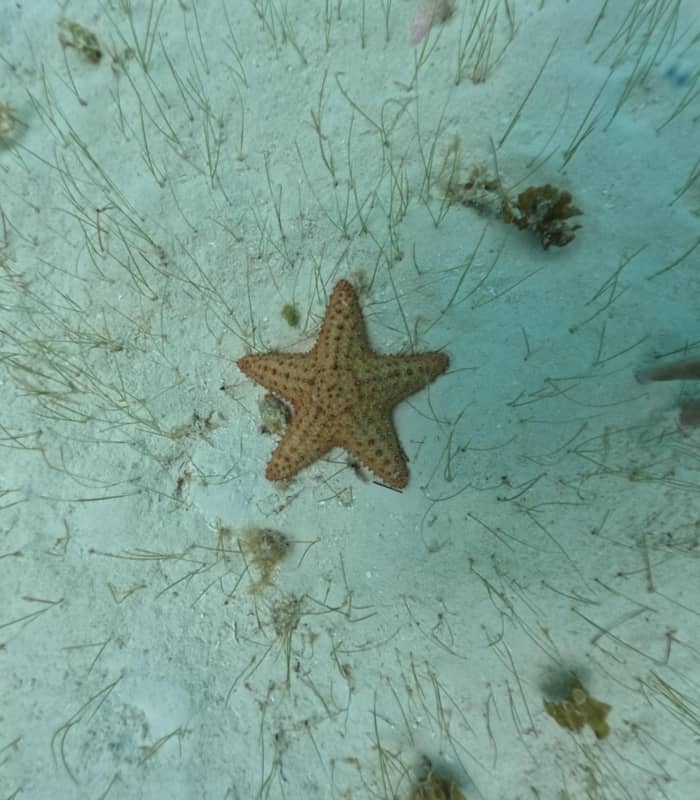
The sandbar is shallow, clear and known for starfish.8
Beach stop
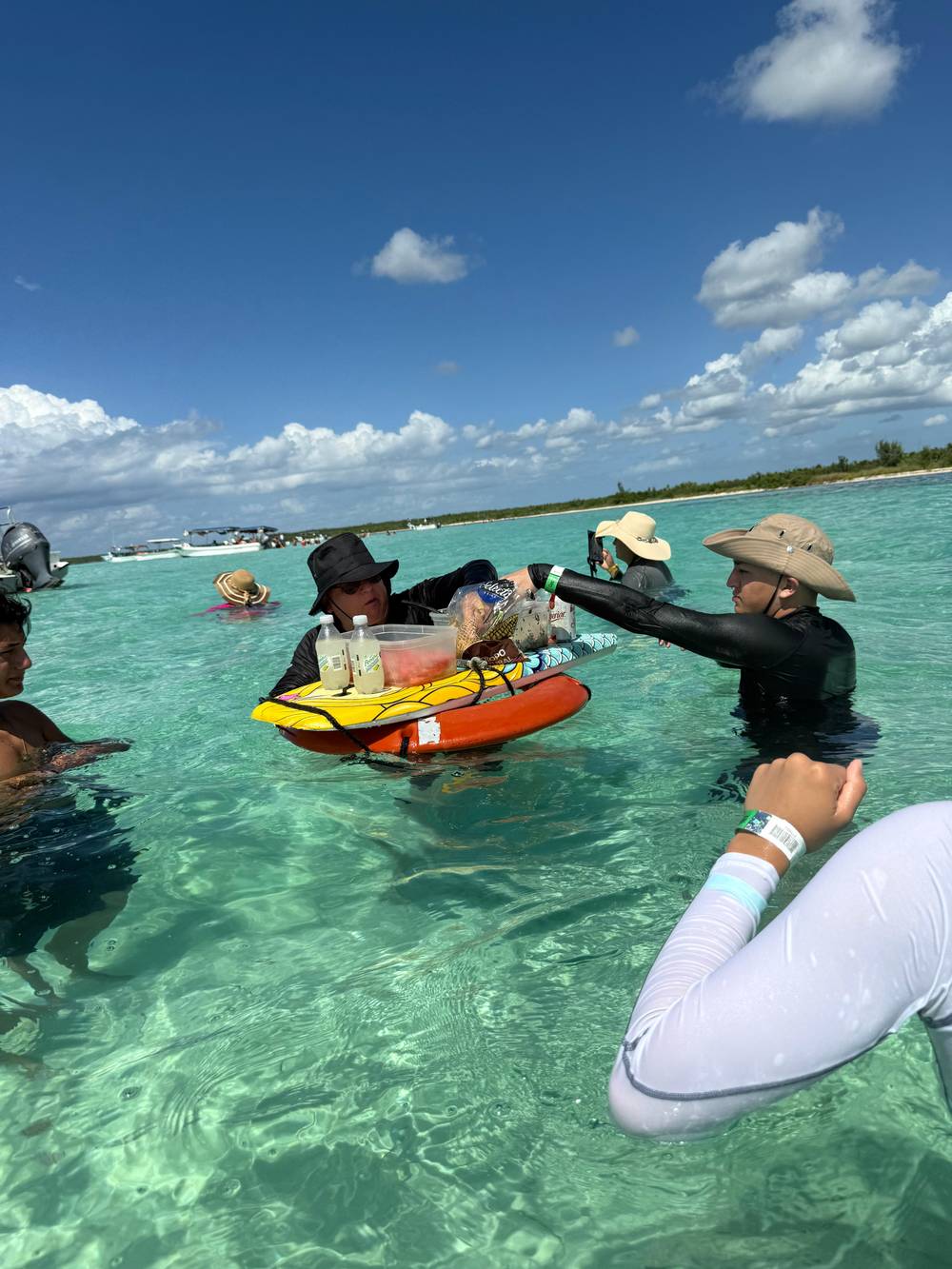
The boat finishes at El Cielito beach, where food and drink are served.
Back ashore
The boat is moored again between 4 and 4:30 pm.
The reef has been closed to tourism before. In 2019 the park authority paused part of the tourism at Palancar, at Colombia and at the El Cielo site from 7 October, covering 3 of the 14 reef complexes of the park.17,18 By January 2020 Palancar and Colombia had reopened from 15 December, so closures here are real but not permanent.19
Disease was the reason. Monitoring found reefs in the park that had lost up to 90% of corals susceptible to white syndrome, with Colombia among the healthiest.20,21 The authority also rotates rest periods, and in August 2020 it rested the Cuevas and Ladrillos parts of Palancar and the Colombia sites through 30 September for coral spawning.22 Ask your operator which sites are open on your date.
The visitor rules are short and strict. Only authorized boats and guides may work in the park, anchoring is banned, touching the reefs and fishing are off limits, and the list closes the door on sunscreen.7,6,4 The park also charges MXN 225 for each visitor each day.12 Every operator is bound by these rules, so a good guide will brief you before you enter the water.
Video
Watson's Family Travels on YouTube · Video data is requested only when you tap play.
El Cielo is a shallow sandbar with clear water, accessible by boat and known for its starfish.
Before you swim
A confident swimmer gets the most from a Palancar day, because the reef is deep and the boat stop depends on the current and the swell. If you are comfortable in open water with a mask and a vest, the day is a pleasure. If you have never snorkeled, ask the guide to stay close and take the shallow stops slowly, and treat the reef stop as a look down, not a dive.
The reviews of the busiest boat give the best proof that guides matter here. It has 1,369 reviews averaging 4.3, and the turtle bay trip has 656 reviews averaging 4.4 with a transportation rating of 5.0. Those figures are about the operators and not about the reef, but they show that a well-run boat is the biggest variable you can control.
Families should read the minimum age on the listing, since catamaran days set 8 or 10 years for the snorkeling. A glass-bottom boat lets non-swimmers stay dry and view the reef through the hull, which is a sound plan for a mixed group. If anyone in your party is nervous in the water, choose the boat with the least ambitious stop list.
El Cielo is the counterpoint to Palancar. It is a light, shallow sandbar served by boats and best known for its starfish.8 Among the park's attractions it lists the coral reefs, El Cielo beach and the wreck known as C-53.23 Where Palancar is deep and dramatic, El Cielo is gentle and light, and most boat days give you both.
For a snorkeler this is the better half of the day for easy swimming. You can stand in the water at a sandbar, watch the sea floor and relax, while the reef stop asks more of you. The site tour's plan puts the reef first and the sandbar second, and then lets you rest on the beach with ceviche, fruit and a drink. The page on the tour day goes through that order hour by hour.
Choose by what you want to say afterward. If you want to say you snorkeled the famous Palancar reef, any of the boats above will do it. If you want a long, easy swim with starfish, pick a trip that spends more of its time at the shallow stops, such as the starfish and turtle bay trip. The decision helper above matches your answers to a listing with its starting price.
FAQ
Boat days with a Palancar stop are sold from Cozumel, and the site tour lists Palancar reef as a snorkel stop.
Ask the guide to stay close; the shallow El Cielo stop is easier than the reef itself.8
CONANP's rule list says no sunscreen at all, and the listings tell you to apply it before the tour.4
The programme treats the names as a division of a single reef structure of roughly 6 to 7 km.1
The busiest boat starts from $55 and the site tour from $72.
Sources
Planning a Palancar snorkel? Ask a real person here.