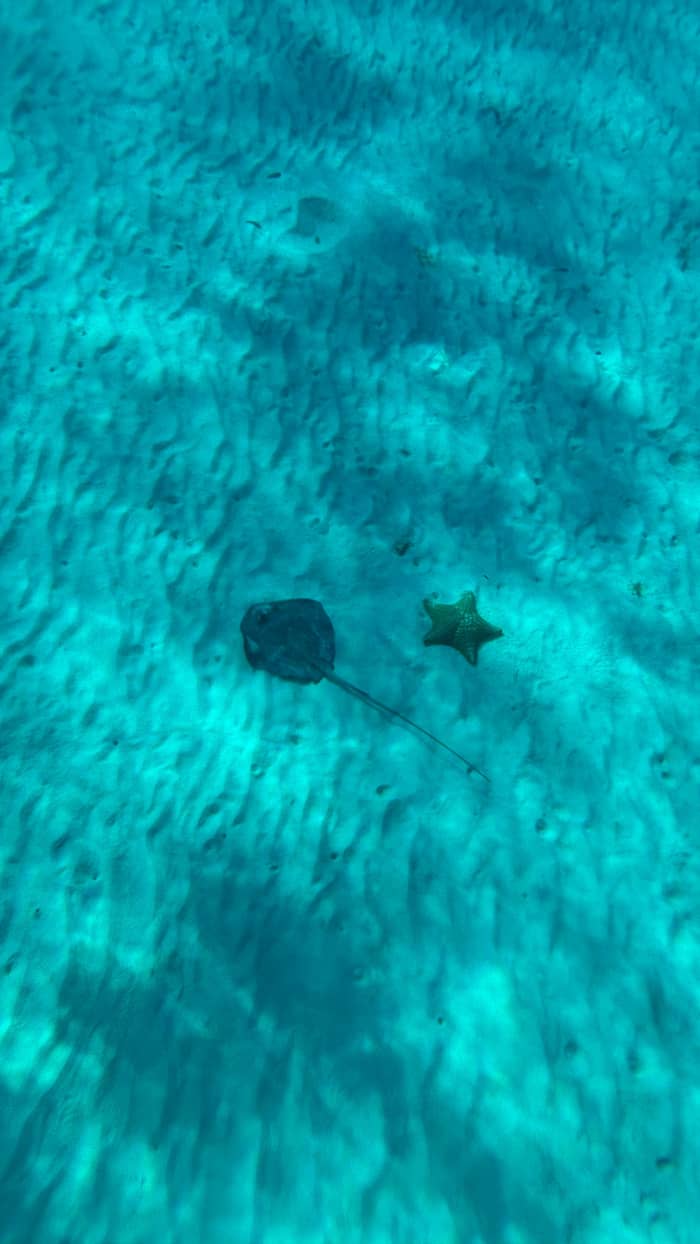
Boat day
El Cielo and Palancar
Reef and starfish sandbar
- StopsPalancar reef and El Cielo
- Time4 to 4.5 hours
- GroupLimited to 14 participants
- Pricefrom $72
Group price check
Summary
The Palancar coral reef holds many kinds of coral, fish and protected turtles inside Cozumel's national park.
Reef life in brief
3 options compared
Set your party size and see the starting prices of these boat days side by side.
≈
View≈
View≈
ViewFigures are GetYourGuide from-prices, translated at the ECB reference rate. The booking step shows what you pay exactly.
From the stony corals and sponges that build the reef to the surgeonfish, rays and turtles that live on it, with the species counts the park publishes and the rules that protect them.
Editorial team, palancarsnorkel.quest · Updated November 24, 2026 · Quick read: 7 min
Facts at a glance
Cozumel sits on the edge of the Caribbean, and the tourism board says the Mesoamerican Reef runs along its shores.1 The 1996 decree that protects the island's reefs calls the Western Atlantic reef belt the second largest coral barrier in the world.13,14 Palancar is one of the named reefs inside that protected area, which covers 11,987.88 ha and which CONANP lists as Ramsar site 1449.15,2,16
The decree explains why the reefs were worth a park. It says coral reefs are among the most diverse and complex marine environments, compared for their diversity only with tall evergreen rainforests.17 The sentence is the decree's own, written when the park was created in 1996.13 That sounds grand, but it also tells you what to expect at the surface: not one star attraction, but a crowd of small lives, each of them doing a job on the reef.
This page follows that crowd from the bottom of the food chain upward: the corals and sponges that make the structure, the fish and rays that move over it, the turtles that visit and nest, and the threats the park is watching. Every count comes from the park or from a government science agency, and where two official pages disagree the page gives both. Counts are for the whole National Park unless a sentence says otherwise.
The park's count
| Group | Species in the park | Note |
|---|---|---|
| Hard corals | 663 | Includes the stony builders |
| Soft corals | 394 | Fans and whips that sway |
| Sponges | 5528 | Includes the giant barrel sponge31 |
| Fish | 2625 | The 1996 decree says more than 5006 |
| Echinoderms | 5729 | Includes sea stars and urchins |
| Algae | 8430 | Grow among the corals |
The counts come from the park's monitoring page, which gives them as species in the National Park as a whole and not for Palancar alone.3
A reef is a living building, and its bricks are stony corals. The decree lists mountain, brain, star, finger, leaf, elkhorn and staghorn coral among the corals found on these reefs.23 The park's own monitoring page puts numbers on the variety: 66 species of hard coral and 39 species of soft coral.3,4 Soft corals are the fans and whips that sway with the current instead of building stone.
The management program names the species doing most of the building on the Colombia and Palancar reef: Montastrea annularis, in very numerous colonies of varied size.24 Inside every reef-building coral lives a partner. NOAA explains that zooxanthellae, the photosynthetic cells in the coral tissue, pass as much as 90 percent of the organic material they make to the host coral.25 Sponges and soft corals, by contrast, fill the spaces between the stony colonies.
That partnership has a visible consequence. NOAA says corals that build reefs need clear water, so that sunlight reaches the zooxanthellae inside them,26 which fits the tourism board's remark that the Palancar, Colombia and Santa Rosa reefs have exceptionally clear water.27 Around the corals the park counts 55 species of sponge, 57 of echinoderm and 84 of algae,28,29,30 and its program lists the giant barrel sponge, Xestospongia muta.31
The decree gives Palancar named parts, and one of them, Cuevones, means Caves.15 That is the origin of the phrase Palancar caves reef, and it points to the reef's deeper character. The park's August 2020 rest notice lists Palancar Cuevas among the sites of its restricted-use zone, together with Palancar Ladrillos and three Colombia sites.22 Palancar caves reef is therefore a label for part of the system, and nothing in the park papers describes a cave you could visit from the surface.
The geography explains the drama. At Palancar the program locates huge reefs on the platform's rim, where the second step takes over as the edge.35 Past that edge the Ramsar sheet has the shelf running out at 20 to 30 m, after which the bottom plunges, nearly vertically, to beyond 400 m.36 A reef on the lip of a drop like that is best met on a guided dive, with a guide who knows which of the named parts is open and how the current is running that day.
For a snorkeller the caves are a reason to look down and a reason to stay with the group, not a place to go. The 3 reefs boat listing gives Playa Palancar a stop of 25 minutes, and the park wants every recreational snorkel or dive supervised by an authorised guide.37 Keep the Caves for a certified dive with a guide who knows the site, and ask the crew on the day which stop you are making, since the list of open sites rotates.32
Pick your sighting
Tap what you hope to see and get the season or habit that fits.
If I hope to see eagle rays
Go from December to March
The tourism board reports eagle rays between December and March.18
If I want turtles on the beach
Visit from May to October
That is the nesting season on the island's beaches, not a promise of sightings at sea.19
If I want to see healthy coral
Ask about rest periods
CONANP rests sites in turn, and it found some reefs had lost up to 90% of susceptible corals.32,33
If I want clear fish photos
Pick a clear-water day
The tourism board describes exceptionally clear water at Palancar, Colombia and Santa Rosa.27
If I want to protect the reef
Keep your hands off
The program forbids touching the reef, feeding animals and using gloves.10,11,12
What each boat day shows
Boat day
Reef and starfish sandbar
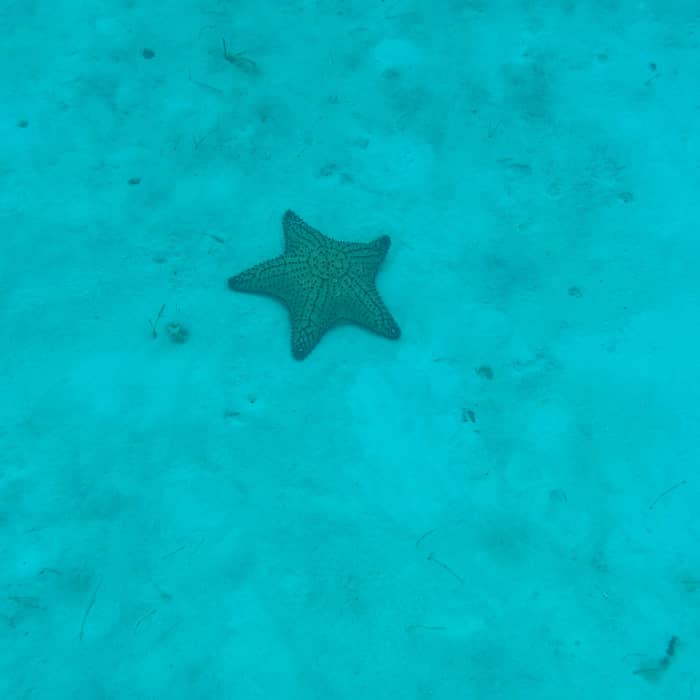
Boat day
Sandbar, beach, turtle bay
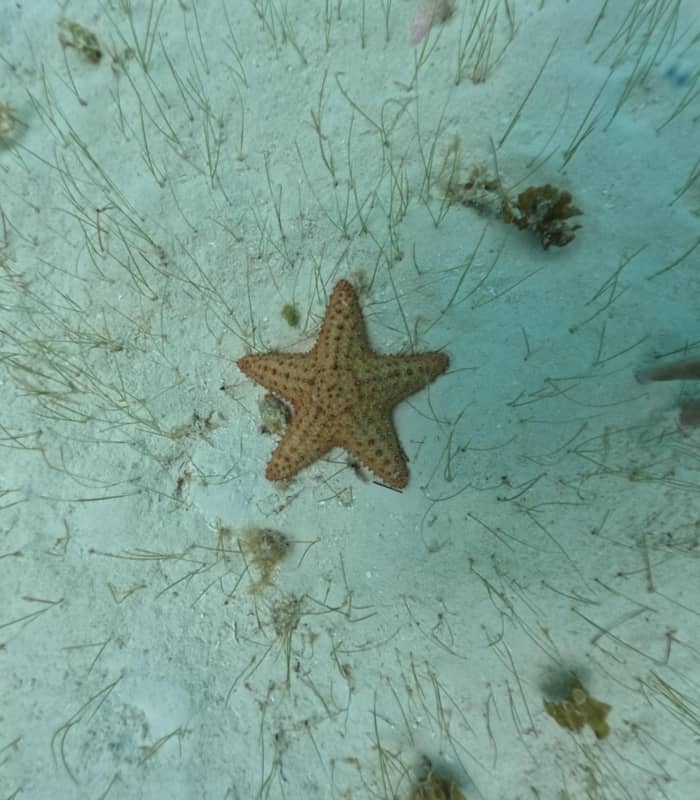
Boat day
Palancar, Columbia, El Cielo
Walls are a feature of this coast. The tourism board names underwater walls among the things that make the Palancar, Colombia and Santa Rosa reefs stand out.27 The program describes a wall formation in technical terms: a strongly eroded limestone parapet that becomes almost vertical.40 That is a better picture than any brochure adjective, and the plain meaning of wall here is a steep face and not a gentle slope.
The program calls Santa Rosa the best-known wall of the park, its edge well developed at 16 to 20 m.41 For Palancar itself it speaks in a slightly different language, describing huge reefs growing on the platform edge.35 So when a dive site calls itself the Palancar reef wall, the park papers back the idea of an edge with a steep drop, but they do not publish a separate depth for it.
Keep that in mind when you read a trip report. A snorkeller who says they floated over the wall at Palancar is describing the water above the drop, where the reef tops lie far below. For the crest off Punta Sur the program gives 16 to 21 m below the surface,42 so a mask and fins at the surface show you blue water and fish more than reef blocks. Look down for the colour change from pale shallows to deep blue, which marks the drop.
A year on the reef
Winter
Winter is when eagle rays are reported, from December to March.18
Summer
Turtles come ashore to nest on beaches around the island from May to October.19
The autumn closure
Tourism at Palancar, Colombia and El Cielo was partly suspended from 7 October 2019.20
The next winter
By January 2020 Palancar and Colombia were open to tourism again from 15 December.21
Late summer
In 2020 the Palancar Caves and Bricks rested from August to 30 September.22
The fish list is long and the numbers depend on the page. The decree says the reef community holds more than 500 fish species, naming surgeonfish, parrotfish, groupers and snappers among the families that stand out,6,43 while the park's monitoring page counts 262 species instead.5 The Ramsar sheet adds that surgeonfish and parrotfish predominate by abundance and form the highest fish biomass on the reef plateaus.44
Some residents are special. The splendid toadfish, Sanopus splendidus, is reported as endemic to Cozumel, and the park lists it as a species of restricted distribution whose first records came from the island.45,46 CONANP also lists the spotted eagle ray among the park's representative species,47 and the Ramsar sheet names the southern stingray among the conspicuous fish of the water column.48 The tourism board reports eagle rays between December and March.18
Turtles are the headline of the protected list. The park monitoring page lists the green, hawksbill and loggerhead turtles as protected reptiles,7,8,9 and the tourism board gives May to October for sea turtles nesting on the island's beaches.19 CONANP's monitoring of the rested zones also noted blacktip sharks, shoals of fish and bottlenose dolphins,49 which is a reminder that the reef is a working ecosystem and not an aquarium.
Video
James Dorgan on YouTube · Video data is requested only when you tap play.
they expel the symbiotic algae living in their tissues, causing them to turn completely white
Before you go
The reef is not untouched. In 2019 CONANP paused part of the visiting at Palancar, Colombia and El Cielo in response to a coral disease named white syndrome,50 and its monitoring later showed up to 90% of the disease-prone corals gone from some reefs.33 The same agency says the Colombia reef is among the best-conserved in the park.51 Those figures come from the park's own press notices, so they are a snapshot of that time and not a current survey.
Heat is the other worry. NOAA explains that when corals are stressed by changes in temperature, light or nutrients they expel the algae living in their tissues and turn completely white, which is called bleaching.34 A bleached coral is not dead and can survive the event, though it is under more stress.52 Nothing in the sources used here gives a bleaching record for Palancar itself, so treat NOAA's description as the general mechanism.
Your part is easy to describe. The program forbids touching, standing on or dragging gear over the reef, shallow areas included, and it forbids feeding, chasing or harassing marine organisms and the use of gloves.10,11,12 It also treats coming within 1.5 m of coral as an offence.39 Those rules are written for divers and snorkellers alike, and a good guide will repeat them before you enter the water.
FAQ
Sources
Planning a Palancar snorkel? Ask a real person here.